
AI Fortune Teller: Building the Noggin Oracle
Introduction
This article documents the experiment, the tools used, the decisions made, and what still needs human judgment before the Noggin Oracle becomes a finished public feature. As with many of our AI experiments, the goal is not to pretend that the machine did everything perfectly. The goal is to show how a person can guide AI tools, make practical choices, and keep curiosity alive while building something useful and fun.
Carnival Curiosities No. 7
Noggin Oracle
Step up to the cabinet and receive a fortune from Madame Aurelia, the velvet-voiced seer of the midway.
Ask a question, choose a path, and let the brass gears of the oracle prepare a mysterious little answer.
Give the cabinet a name, a question, and a path to follow.
Tap the token and let the brass gears wake the oracle.
Read the card as a prompt for curiosity, not a command.
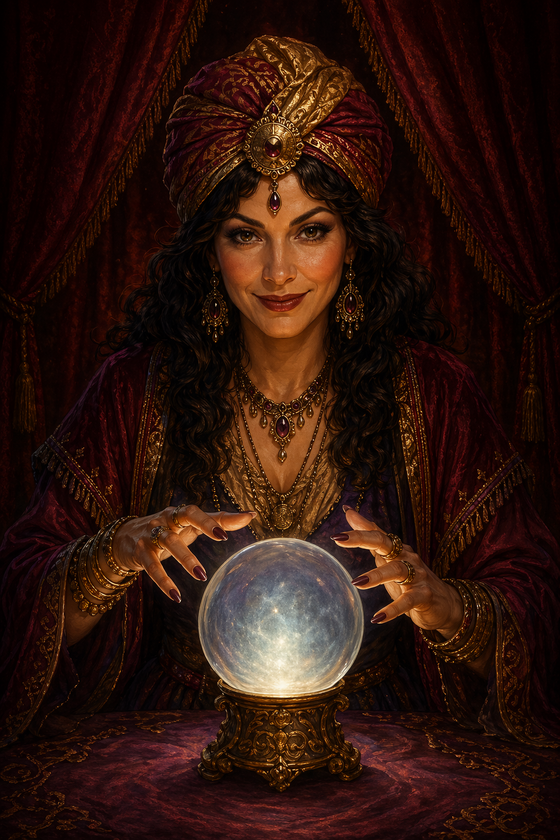
Tap the coin to consult Madame Aurelia.
Madame Aurelia awaits...
Your fortune card will appear here.
Recent Readings
The cabinet remembers your last few fortunes in this browser session.
- No fortunes yet. Insert a coin to begin.
Experiment Summary:
Try Our Curated Resources
The resources section of our website offers a range of tools designed to enhance your learning and creativity. Check out our selection today!
Purpose of the Experiment:
- Create an interactive fortune teller cabinet with a strong visual theme.
- Keep the first public version low-cost and easy to host.
- Avoid paid AI token usage for the first release.
- Build something that can later grow into a larger fortune matrix.
- Keep the human in the loop for design, deployment, writing, testing, safety, and future decisions.
How the Noggin Oracle Works:
The current version works like a small interactive web app inside WordPress.
The visitor enters a name and question, selects a category, and taps the coin. JavaScript handles the front-end interaction and animation. The plugin then sends the request to a WordPress REST endpoint. PHP selects a fortune from the current in-file matrix and sends the result back to the browser.
The visitor sees the fortune appear in a styled fortune card, and the page keeps a short recent-reading history during that browser session.
This approach has several advantages:
- It avoids running a separate Python app on the server.
- It can be embedded into a normal WordPress page.
- It keeps the first version inexpensive.
- It keeps the door open for a future database-backed version.
- It makes deployment easier for a site already using WordPress and Divi.
Tools Used:
- Python and Flask were used for the first local prototype.
- HTML, CSS, and JavaScript created the cabinet interface, form, coin animation, and fortune display.
- WordPress was chosen for the public website version because NogginWords already uses it.
- Divi can host the shortcode inside a page layout.
- PHP was used to create the WordPress plugin.
- The WordPress REST API provides a small endpoint for returning fortunes.
- MySQL or MariaDB is planned for a future phase when the fortune matrix becomes larger.
- Codex handled much of the development work, code conversion, structure, and implementation support.
- Human review and decision-making remain necessary for design direction, deployment, testing, article publishing, and future feature choices.
OpenAI Codex
We built the Noggin Oracle with OpenAI Codex. Explore the AI coding partner behind the project and see what you can build with it.
Result of the Experiment:
Assuming the plugin deploys successfully, this experiment can be considered a success.
The project moved from a local Python prototype to a WordPress-ready plugin. It now has a shortcode, scoped styling, JavaScript interaction, optimized image assets, a REST endpoint, and notes for a future database phase.
This is a strong result for a low-budget experiment. The Noggin Oracle does not yet have the full expanded fortune matrix, admin editing tools, database storage, analytics, or paid AI generation. However, it has reached the important first milestone: a working web feature that can be placed on NogginWords and shared with visitors.
It also demonstrates a practical lesson about AI-assisted development. The most useful path was not to build the biggest version first. The best path was to choose a small version that can actually be deployed, tested, and improved.
What Worked Well:
The visual theme worked well because the fortune teller cabinet gives the experiment an immediate personality. It is not just a plain form asking for input. The coin mechanism, curtains, portrait, and fortune card create a playful interaction that matches the curiosity-driven style of NogginWords.
The WordPress plugin direction also worked well. Since NogginWords already uses WordPress and Divi, a shortcode plugin is easier to manage than a separate Python service. It can be uploaded, activated, placed on a page, and improved over time.
Another success was keeping the first version free from live AI token costs. A static or curated fortune matrix may sound simple, but simplicity is valuable when a project is experimental and budget matters.
What Still Needs Human Guidance:
Even with AI doing much of the development work, the project is not finished by magic.
Several decisions still need human review:
- Where the feature should live on NogginWords.
- Whether it should be a standalone article page, a featured experiment, or part of the quizzes section.
- Whether the visual style should be more carnival, mystical, educational, funny, or branded to NogginWords.
- How much visitor input should be stored, if any.
- What privacy language should appear if reading history or analytics are added.
- How the future fortune matrix should be written, categorized, and reviewed.
- Whether direct AI generation should ever be added, and if so, how costs and safety should be controlled.
This is the real human-in-the-loop process. AI can help build the tool, but humans still decide what the tool should be, how it should behave, and whether it serves visitors well.
Limitations:
The current version has several limitations.
- The fortune matrix is still small.
- Fortunes are selected from in-file arrays rather than a database.
- There is no WordPress admin screen for editing fortunes yet.
- The visual design may need adjustment once placed inside the actual Divi layout.
- The project does not yet include moderation or safety systems for open-ended AI generation.
- The reading history is temporary and only exists in the browser session.
These limitations are not failures. They are useful markers for the next stage of development.
Improvements to Add:
Future improvements could include:
- Add a larger fortune matrix with more categories and tones.
- Move fortunes into MySQL or MariaDB tables.
- Add a WordPress admin screen for editing categories and fortunes.
- Add CSV import and export for easier content management.
- Add shareable fortune cards for social posting.
- Add optional sound effects and a printed-card animation.
- Add more characters or reader personalities.
- Add accessibility checks for keyboard navigation, contrast, and screen readers.
- Add analytics that count categories without storing personal visitor data.
- Add a privacy-conscious consent option before storing any questions or names.
- Add an optional paid or limited AI reading mode later, only after cost controls are clear.
The next practical improvement is the expanded fortune matrix. A database-backed matrix would allow many more readings without making the plugin code messy. It would also make it easier to edit fortunes from inside WordPress rather than changing code.
Experiment Notes:
This experiment is a good example of co-creating with AI rather than simply asking AI to create everything alone.
The human role included the idea, constraints, budget reality, hosting context, website direction, and final judgment. Codex handled a large amount of the development work, including converting the Python prototype into a WordPress plugin structure and preparing the phase-two database direction.
That partnership matters. AI tools can speed up development, but a useful project still needs a person to ask why it should exist, who it helps, how it fits the website, and what should happen next.
Conclusion:
The Noggin Oracle experiment is a success because it reached a practical and deployable stage. It began as a Python fortune teller prototype and became a WordPress plugin that can be tested on NogginWords with a simple shortcode.
It is not the final version, and that is part of the point. Experiments grow by being tested, questioned, improved, and shared. The first working version gives us something real to learn from.
In the future, the Noggin Oracle may gain a larger database-backed fortune matrix, richer design, visitor-friendly sharing features, and perhaps even optional AI-generated readings. For now, it stands as a hopeful little cabinet of code, curiosity, and imagination.
Sometimes the best fortune is not a prediction. It is the reminder that we can build small, learn honestly, and keep opening the next curious door.
Sources And Style References:
- NogginWords homepage: nogginwords.com
- Snake Game AI Coding Experiment: nogginwords.com/snake-game-ai-coding-experiment
- AI-generated Hangman Experiment: nogginwords.com/ai-generated-hangman
- AI D&D Adventure Generator: nogginwords.com/ai-dd-adventure-generator